


Air-Pot system supports protection of historic plant collection
During the restoration of Edinburgh’s historic Palm Houses, Air-Pot containers were used to safeguard valuable plant specimens. The system is reported to have played a key role in maintaining plant health throughout the multi-year project.
von Porcupine PR erschienen am 25.03.2026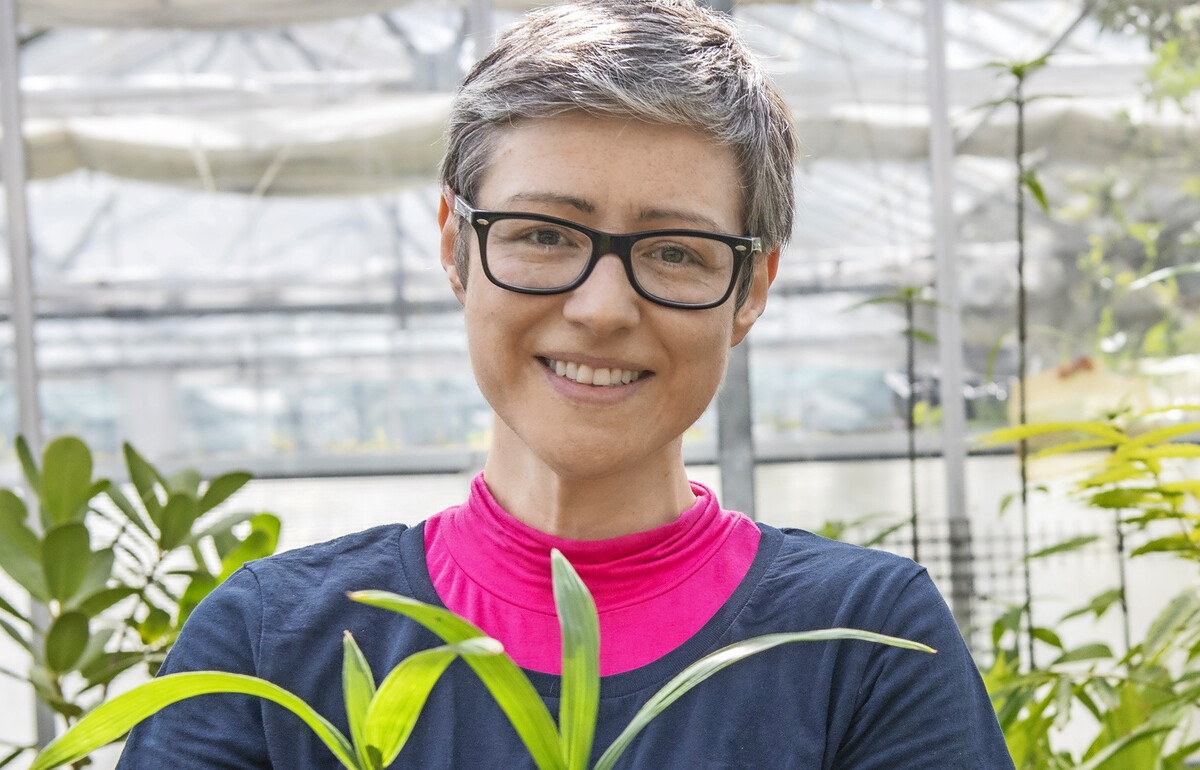
The horticulture team at the Royal Botanic Garden Edinburgh has highlighted the use of Air-Pot containers as a significant factor in protecting parts of its historic plant collection during the restoration of the A-listed Palm Houses. The project, completed in March 2026, involved extensive structural work and required the temporary relocation of hundreds of plants.
Originally built in 1834 and 1858, the Palm Houses were closed in 2021 to undergo a major refurbishment programme. This included repairs to approximately 600 square metres of ironwork, the replacement of 5,750 glass panes, and the restoration of sandstone elements. Around 800 plants, including large palms and tree ferns, were removed and rehoused during this period.
According to Sadie Barber, Deputy Curator of Glasshouses and Indoor Living Collections, the Air-Pot system enabled the team to maintain plant health over several years. The containers were used to support root system development and stability, which was considered essential for preserving large and historically significant specimens.
The Air-Pot system is based on air-pruning technology designed to prevent root circling and encourage the formation of fibrous root structures. These characteristics are intended to improve plant resilience and long-term performance, particularly under containerised conditions.
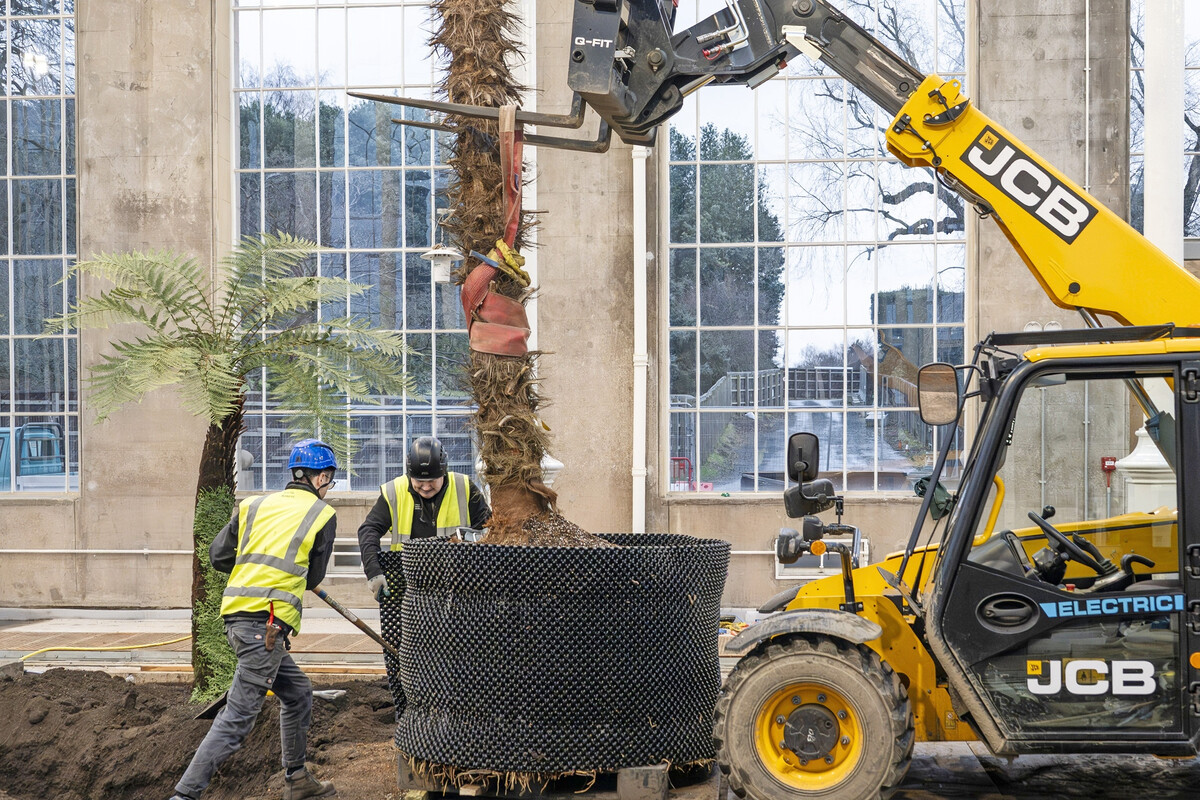
From the manufacturer’s perspective, the system provided an effective solution for the logistical and horticultural challenges associated with relocating and maintaining large specimens during the restoration process. The containers are widely used in nurseries, botanical gardens, and research institutions.
Following the completion of the restoration, replanting is currently underway. The largest specimens have already been reintroduced into the upgraded glasshouse environment, which now features improved glazing, drainage systems, and a unified internal layout. The Palm Houses are scheduled to reopen to the public in autumn 2026.
The renewed planting scheme is expected to combine historical botanical elements with modern research approaches, showcasing a range of species including palms, ferns, and understorey plants.
Zu diesem Artikel liegen noch keine Kommentare vor.
Artikel kommentierenSchreiben Sie den ersten Kommentar.