


Industry leaders address climate change, biosecurity, and market transformation
At the AIPH Horticultural Industry Conference in Sydney, international stakeholders discussed key challenges shaping the future of horticulture. Climate adaptation, plant health systems, evolving markets, and policy advocacy were central themes.
von AIPH erschienen am 16.03.2026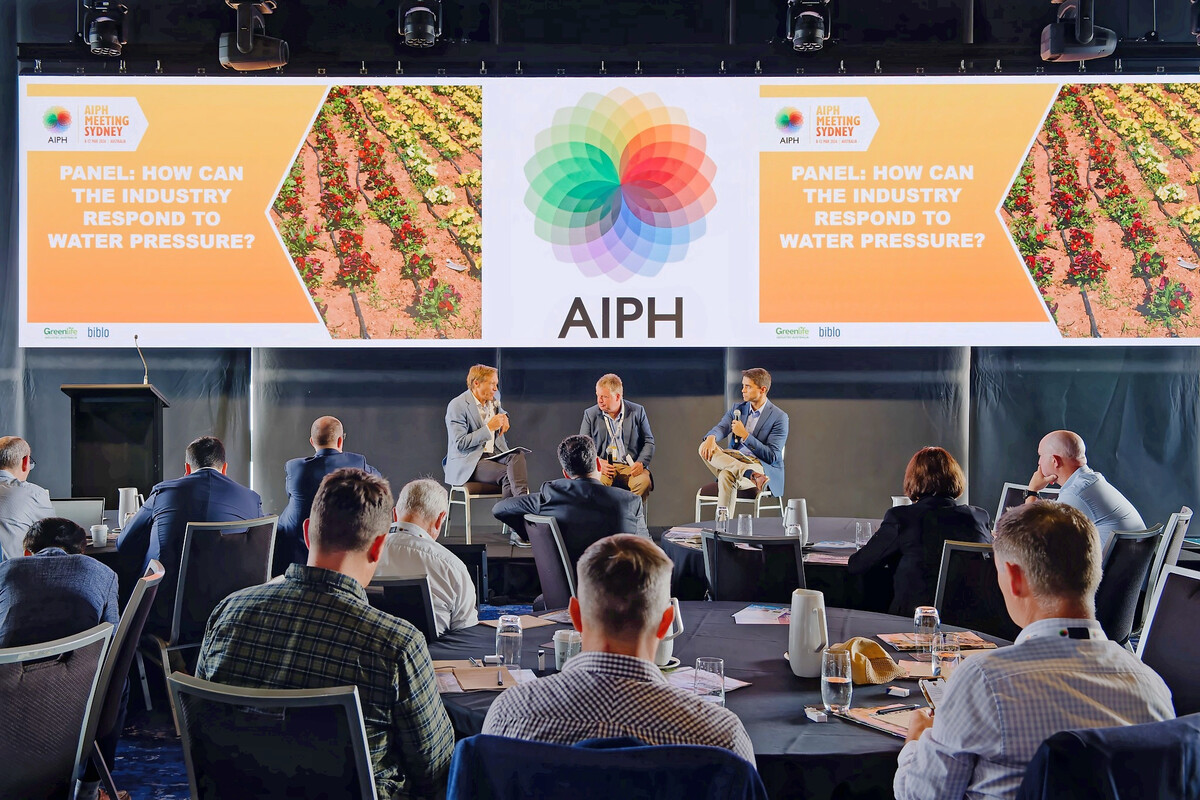
The AIPH Horticultural Industry Conference, held on 10 March 2026 as part of the AIPH meeting in Sydney, brought together global representatives from industry, research, and associations to examine major trends affecting ornamental horticulture. The event was organised with the support of Greenlife Industry Australia.
Climate change and its impact on production systems were among the dominant topics. Hon. Matt Kean, Chair of the Climate Change Authority, emphasised that early action could both reduce emissions and strengthen the sector’s long-term economic prospects. Horticulture, he suggested, can remain competitive if environmental and economic objectives are addressed in parallel.
Water availability was identified as one of the most immediate challenges. Chris Philpot, CEO of The Water Conservancy, noted that rising demand and more frequent droughts—particularly in Oceania—could pose significant risks to growers. He argued that water should be treated as a strategic resource, with solutions such as recycling systems, precision irrigation, and monitoring technologies gaining importance.
Biosecurity was another key focus. National systems such as Australia’s Biosecure HACCP and New Zealand’s PlantPass were presented as effective frameworks for safeguarding plant health. AIPH is working towards a voluntary international plant health management system based on such models, aiming to support consistent standards in global trade.
Speakers also addressed structural changes in retail and shifting consumer behaviour. Rising land values and the expansion of large-format retail are putting pressure on traditional garden centres, while changing consumer expectations require new marketing approaches. Industry initiatives increasingly rely on data-driven campaigns and coordinated communication strategies to maintain consumer engagement.
In the final session, representatives from grower organisations in several countries discussed advocacy efforts. Examples included the formal recognition of ornamental horticulture as part of the agricultural sector in Canada and regulatory adjustments during the Xylella crisis in Italy. At the same time, ongoing challenges such as trade barriers and rising input costs were highlighted.
Overall, the conference underscored the growing importance of international collaboration. As the sector faces environmental pressures, evolving markets, and regulatory complexity, coordinated action across borders is seen as essential for future resilience.
Zu diesem Artikel liegen noch keine Kommentare vor.
Artikel kommentierenSchreiben Sie den ersten Kommentar.